What to Do When You Receive a Court Summons and Criminal Charges
Last updated: 16 Jan 2026
383 Views
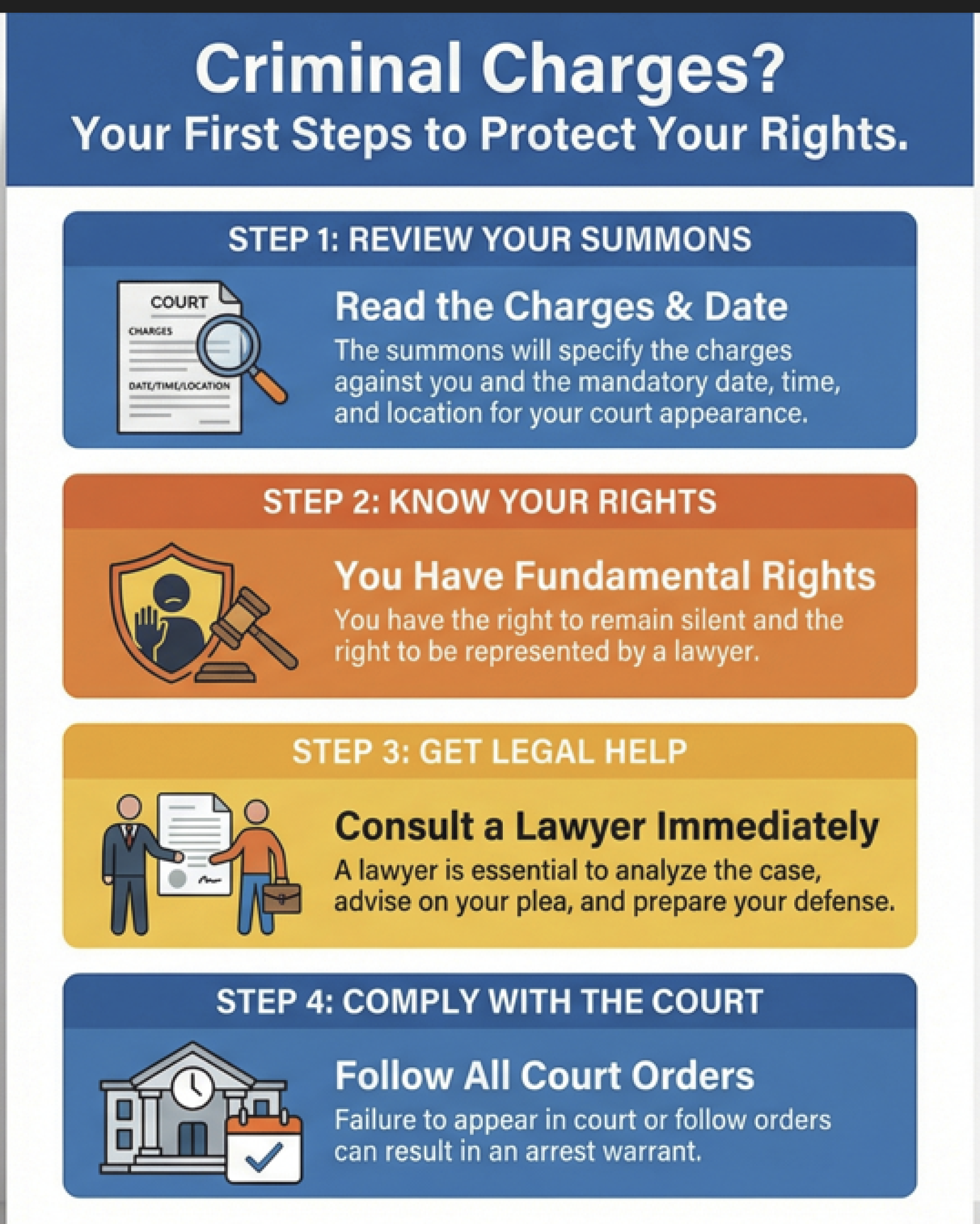
What to Do When You Receive a Court Summons and Criminal Charges
Essential Information for Suspects and Defendants to Protect Their Rights
Criminal cases involve criminal penalties such as imprisonment, fines, or both. Therefore, anyone who receives a court summons or criminal charges must proceed with particular caution.
1. Clearly Identify Your Legal Status
In a criminal case, a person may have one of the following statuses:
Suspect (during the investigation stage)
Defendant (after the public prosecutor files the case with the court)
The documents you receive will clearly state your legal status.
2. Review the Charges and Court Appointment Carefully
A court summons will specify:
The criminal charges alleged
The date, time, and location of the court appearance
Obligations to be performed, such as appearing in court, entering a plea, or reporting as ordered
Failure to appear in court as summoned may result in serious legal consequences.
3. Exercise Your Fundamental Rights
In criminal proceedings, a defendant has important rights, including:
The right to give a statement or to remain silent
The right to consult with and be represented by a lawyer
The right to apply for bail, where permitted by law
4. Consult a Lawyer as Soon as Possible
Criminal cases are complex and directly affect personal liberty.
Having a lawyer to analyze the case, advise on how to plead, and prepare evidence is essential.
5. Entering a Plea in Court
A defendant may:
Enter a plea of not guilty
Enter a guilty plea
Enter a partial plea (admitting some charges and contesting others)
The decision on how to plead should be made based on legal considerations and the advice of a lawyer.
6. Strictly Comply with Court Orders
Whether it involves reporting to authorities, submitting documents, or appearing in court as scheduled, compliance with court orders is mandatory.
Failure to comply may result in the issuance of an arrest warrant or loss of legal rights in the case.
Summary: Criminal Cases
Criminal cases directly affect a person’s liberty and reputation.
Exercising one’s rights properly and having legal representation from the outset are the keys to a fair and effective defense.
Essential Information for Suspects and Defendants to Protect Their Rights
Criminal cases involve criminal penalties such as imprisonment, fines, or both. Therefore, anyone who receives a court summons or criminal charges must proceed with particular caution.
1. Clearly Identify Your Legal Status
In a criminal case, a person may have one of the following statuses:
Suspect (during the investigation stage)
Defendant (after the public prosecutor files the case with the court)
The documents you receive will clearly state your legal status.
2. Review the Charges and Court Appointment Carefully
A court summons will specify:
The criminal charges alleged
The date, time, and location of the court appearance
Obligations to be performed, such as appearing in court, entering a plea, or reporting as ordered
Failure to appear in court as summoned may result in serious legal consequences.
3. Exercise Your Fundamental Rights
In criminal proceedings, a defendant has important rights, including:
The right to give a statement or to remain silent
The right to consult with and be represented by a lawyer
The right to apply for bail, where permitted by law
4. Consult a Lawyer as Soon as Possible
Criminal cases are complex and directly affect personal liberty.
Having a lawyer to analyze the case, advise on how to plead, and prepare evidence is essential.
5. Entering a Plea in Court
A defendant may:
Enter a plea of not guilty
Enter a guilty plea
Enter a partial plea (admitting some charges and contesting others)
The decision on how to plead should be made based on legal considerations and the advice of a lawyer.
6. Strictly Comply with Court Orders
Whether it involves reporting to authorities, submitting documents, or appearing in court as scheduled, compliance with court orders is mandatory.
Failure to comply may result in the issuance of an arrest warrant or loss of legal rights in the case.
Summary: Criminal Cases
Criminal cases directly affect a person’s liberty and reputation.
Exercising one’s rights properly and having legal representation from the outset are the keys to a fair and effective defense.
Related Content

ได้รับหมายศาลคดีแพ่งอย่าตกใจ อธิบายขั้นตอนตั้งแต่ตรวจเอกสาร ยื่นคำให้การ ไปศาล และสิทธิของผู้ถูกฟ้องคดีแพ่ง
 Akapat Sayantana
16 Jan 2026

สำนักงานทนายความให้บริการด้านใดบ้าง ตั้งแต่ปรึกษากฎหมาย คดีแพ่ง คดีอาญา คดีครอบครัว และที่ปรึกษาธุรกิจ โดย WISAN LAW FIRM
Akapat Sayantana
24 Jan 2026

Learn what a lawyer does and how to choose the right law firm for civil, criminal, family, or business cases in Thailand.
Akapat Sayantana
7 Jan 2026
